

Ace takes the hunting, the double-checking, and the back-and-forth out of choosing materials, so your team can spend its time on design.
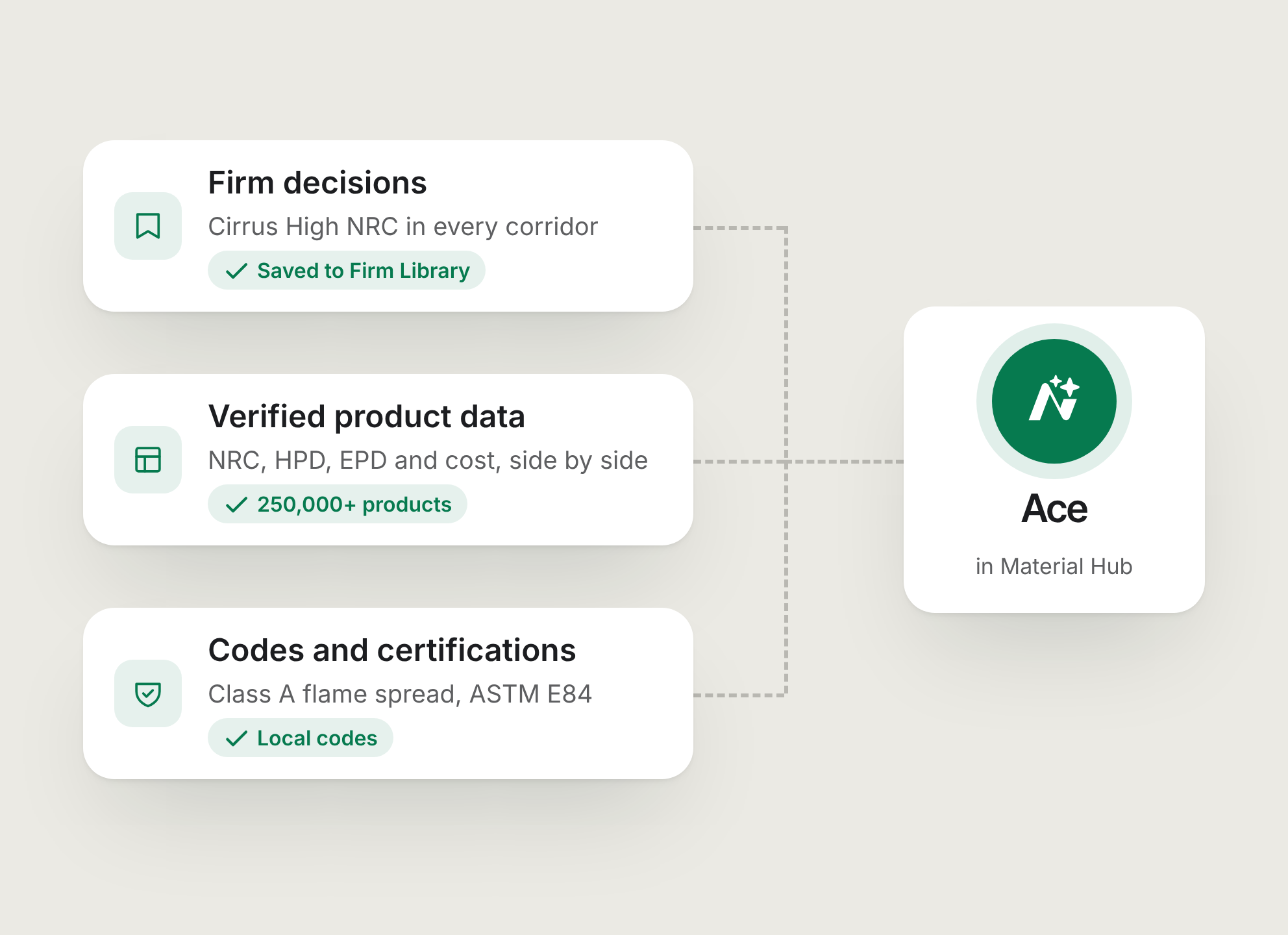
Ace is the material intelligence agent that knows everything from your portfolio and past selections to your standards, verified product data, and even local codes. It works with you through every stage of material selection, from finding products to checking the set before it goes out.
Material selection has worked the same way for decades. Below is what changes at each stage when Ace is part of the project.
Material Intelligence, defined
Firm-wide decisions, verified product data, and compliance frameworks build your firm’s Material Intelligence. Most firms already have all three. They just live in different places: decisions in past projects and inboxes, product data on manufacturer sites, codes and certifications in PDFs and reference binders. Material Hub brings them together, and Ace puts them to use on every project.
Finding products: from twenty browser tabs to one request
Today. A specifier needs a ceiling for a clinic corridor. They open manufacturer sites, download data sheets, compare NRC values in a spreadsheet, look for an HPD, and email a rep about lead times. It takes an afternoon, and the result lives in a spreadsheet no one else will find.
With Ace. Describe the system, the performance target, or the look: “acoustic ceiling for a clinic corridor, NRC 0.80 or higher, with an HPD.” Ace answers with product cards and rep contacts, grounded in Material Hub data across 250,000+ products. Performance, sustainability, cost, and compliance data sit side by side. It can even send an RFI to the rep automatically.
What changes. Research becomes a request. Products get compared on verified data, not on whatever each manufacturer chose to put on page one.
Applying standards: from tribal knowledge to the record
Today. Firm standards live in a binder, a shared drive, and the head of whoever has been at the firm longest. New teams specify what they can find, and design leaders discover it at review.
With Ace. Ace knows your firm, your standards, and your past learnings on every project. Ask for a product and Ace starts with what your firm has already approved, and why.
What changes. The next team starts from the record, not from zero. Standards hold on every project, including the ones a principal never reviews, and a new hire has the firm’s history from day one
.
Documenting: from retyping to one decision that carries through
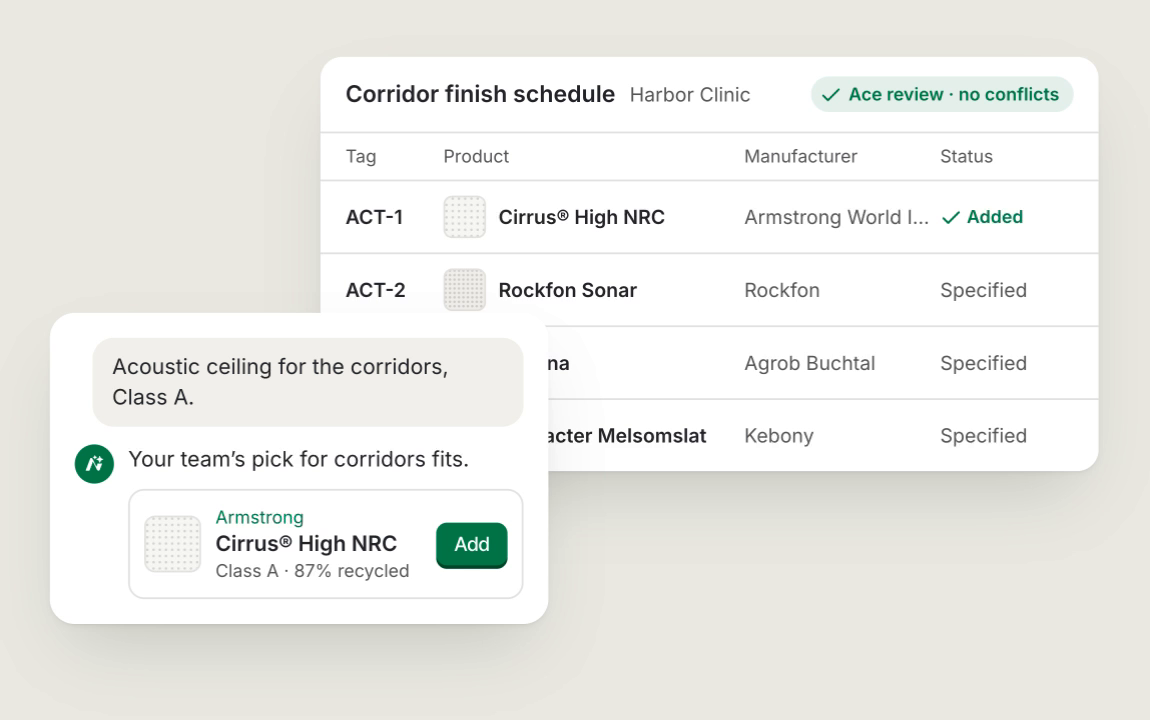
Today. A selection gets typed into a finish schedule, then into a spec, then into Revit keynotes. Every change means updating each one by hand and hoping nothing was missed.
With Ace. Save the decision to the project. When a decision changes, every schedule and spec updates with it, and Revit stays in sync.
What changes. A change gets made once. The documents agree because they all read from the same decision
.
QA/QC: from 11pm checks to catching errors as you go
Today. QA happens at the end, under deadline, with someone checking five documents against each other. Some errors still reach the contractor and come back as RFIs and change orders. Across the industry, the cost is large: Autodesk and FMI estimated that decisions made on bad data caused $88.69 billion in rework in 2020, about 14 percent of all rework that year.
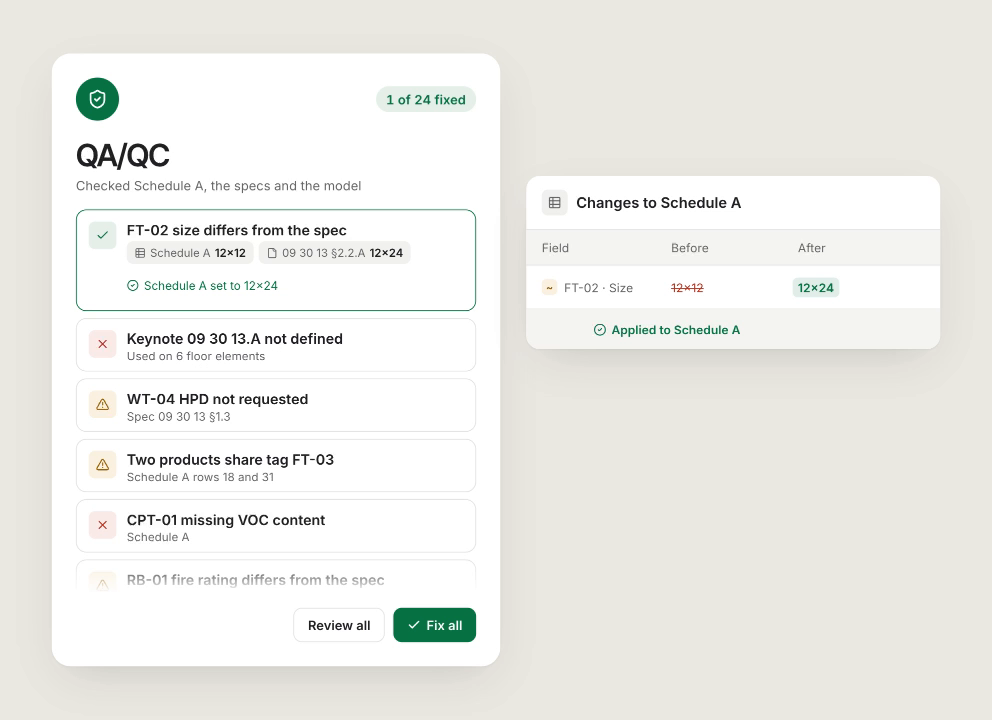
With Ace. Ace reads your schedules and specs, then flags missing data, conflicts, and mismatches while there is still time to fix them.
What changes. Errors surface while they are cheap to fix, not after the set goes out. Every change order started as a material decision, and fewer bad decisions reach the field.
Coordination: from email threads to answers that stay with the decision
Today. A product question goes to a rep by email. The answer lands in one person’s inbox, and three months later no one can find it.
With Ace. Product questions reach the right rep with project context, and the answer stays with the decision. Owners, consultants, and contractors work from the same record.
What changes. Everyone knows what was chosen and why, without a meeting to reconstruct it.
What stays the same
Ace does not make design decisions. Your team still chooses. Ace makes sure each choice is well informed, recorded, documented correctly, and visible to everyone who needs it. Your firm’s Material Intelligence also grows with use: the more decisions your team makes in Material Hub, the more Ace has to work with.
Material selection does not have to be this hard
Finding the right product, holding to firm standards, keeping documents accurate, and keeping everyone aligned used to be four separate jobs. With Ace, they happen in one place, as part of the work. Ask Ace for anything.