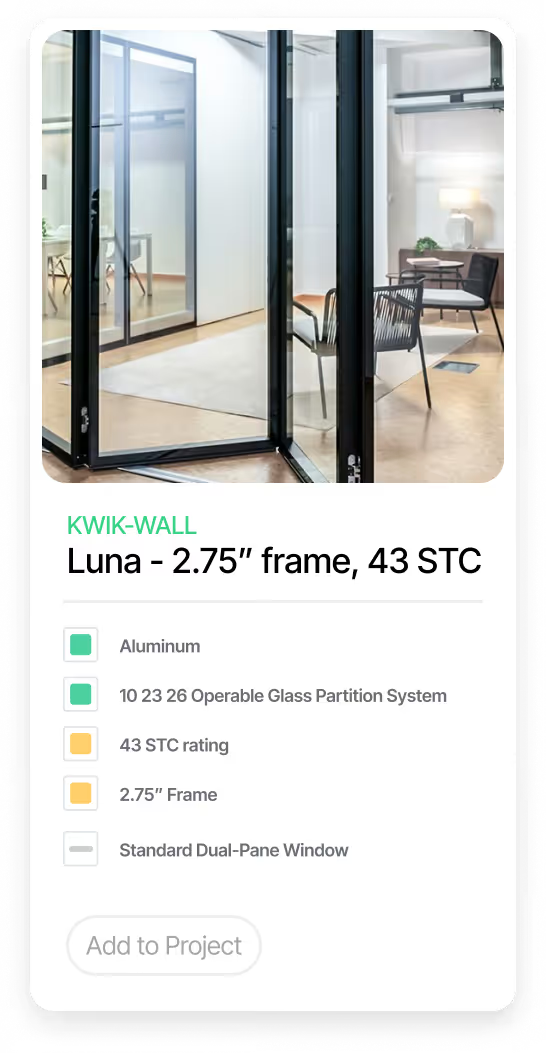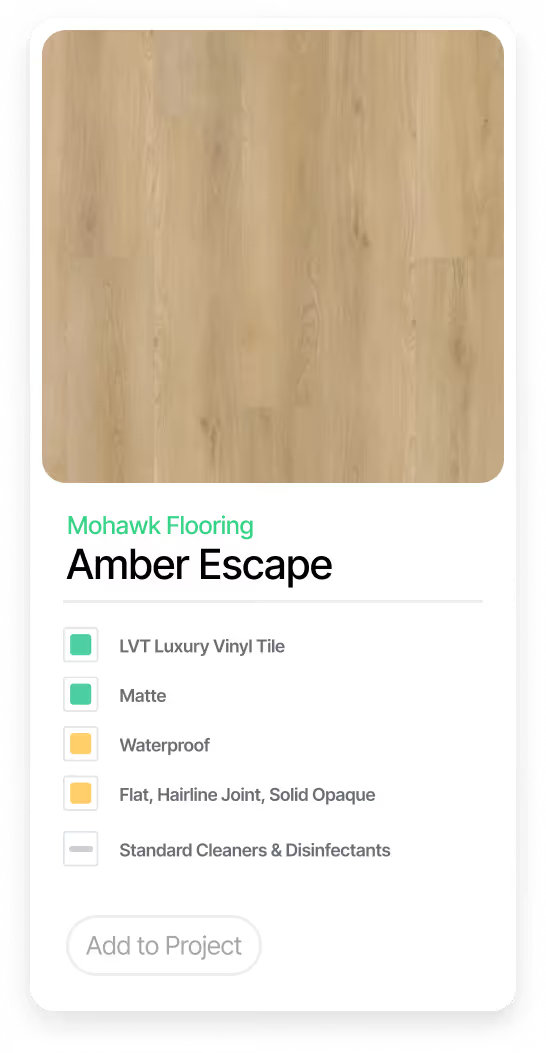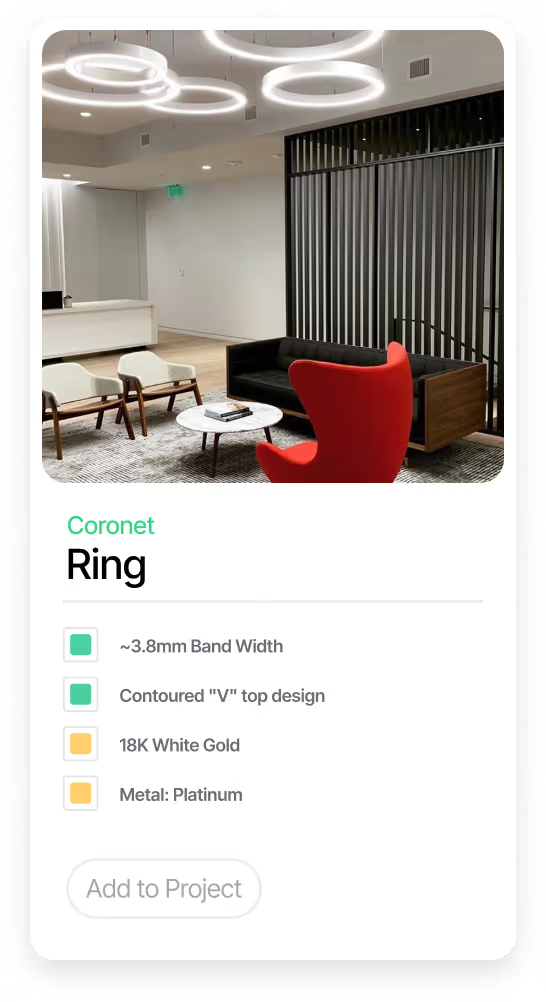



Materials make up close to half of what a building costs. They decide how it performs, how long it lasts, and whether it meets its budget and sustainability targets. Yet the data behind those decisions is the least reliable data a firm works with. A performance number might come from an old manufacturer PDF, or a spreadsheet someone built three years ago.
That unreliable data means the building gets designed twice. Once in the model. Once when the specs are questioned.
Every selection is written by hand into specs, schedules, cut sheets, reports, and the keynotes and tags on the Revit drawings. Nothing connects a product's data attributes to those documents, and nothing keeps the documents in sync with each other, so one product change means updating every one of them by hand. Miss a single keynote and the mismatch becomes an RFI, a substitution, or a callback in the field. The hours pile up in three areas: finding and selecting products, developing the documentation, and fixing the errors and RFIs that follow.
This is the problem material intelligence solves. In Material Hub, every selection is a material information model that carries its full attribute set: aesthetics, performance, certifications, and cost. Every document is a view of that model, so the drawings, keynotes, tags, specs, and schedules all read from one record.
Change the selection once and every one of them updates. Creation, QA, and rework collapse into a single edit, and the errors that come from documents disagreeing stop being created. The result is up to a 90% reduction in the hours material documentation demands.
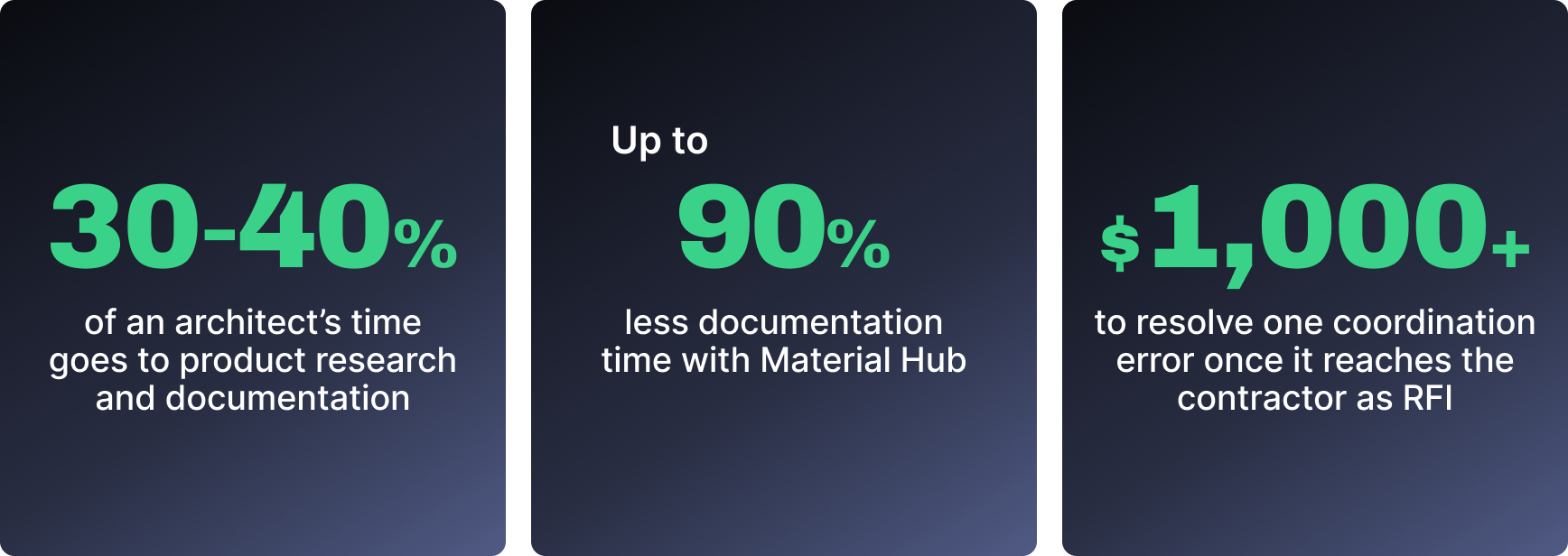
Material work costs you in three places
Every material decision creates work in three areas: researching products, developing the documentation, and fixing the errors that follow. Most of those hours go untracked.
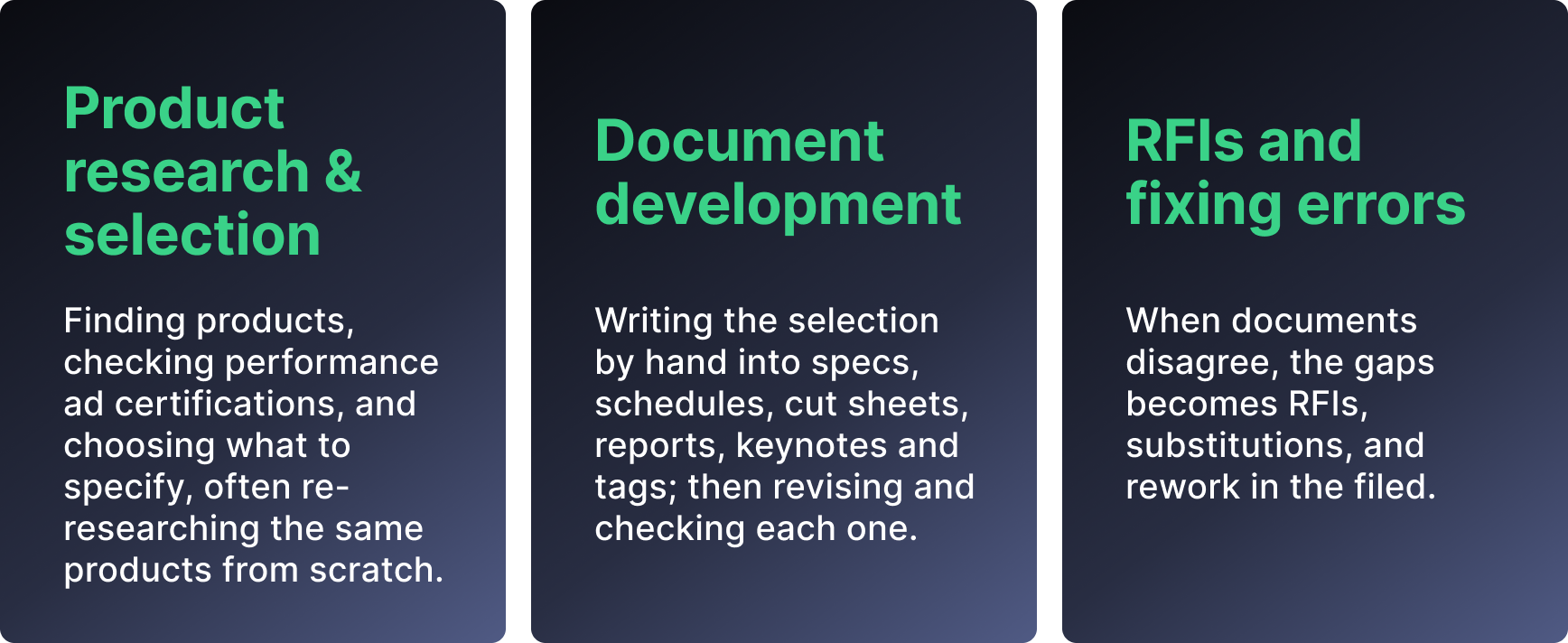
Where the time goes, task by task
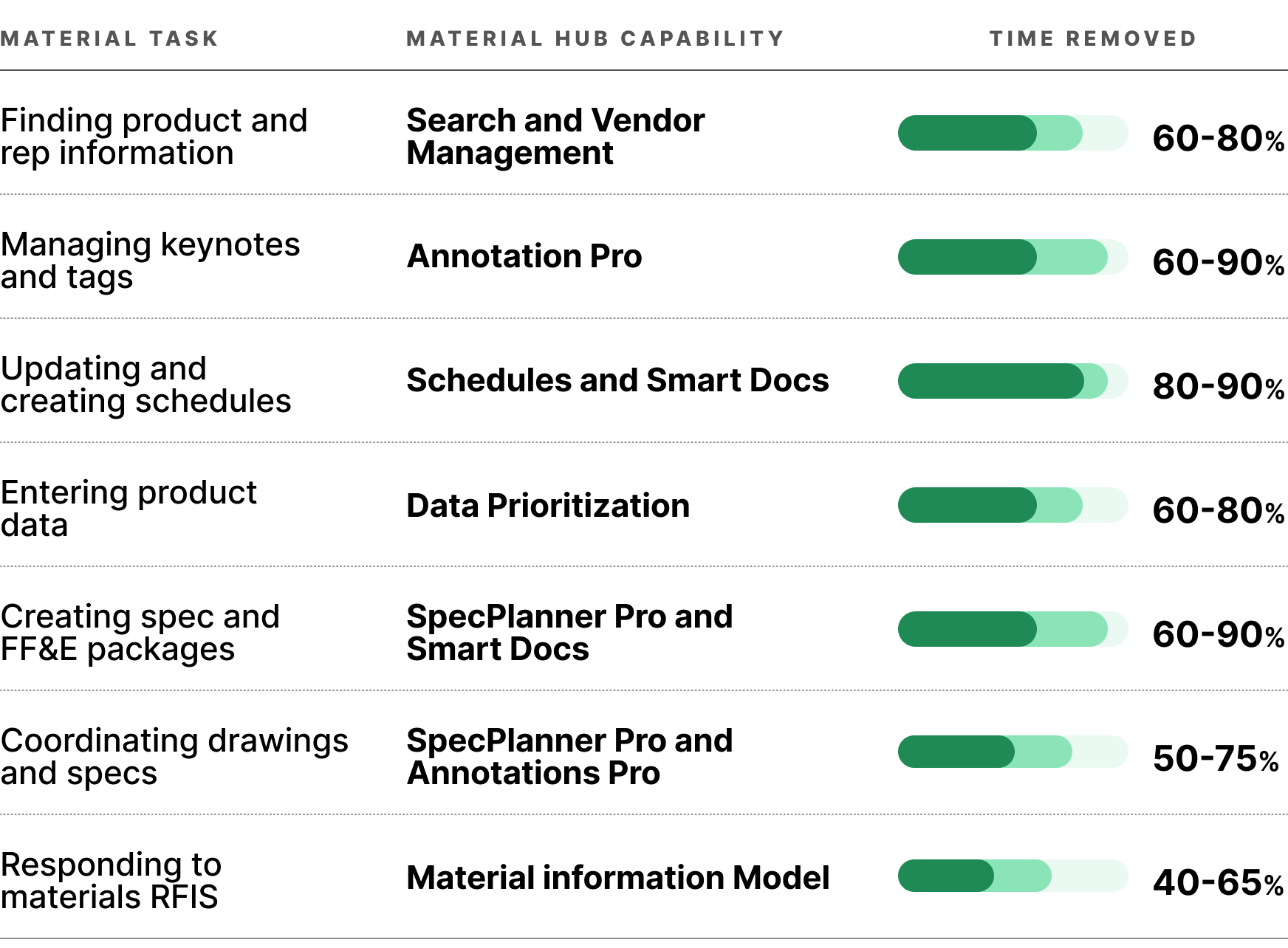
Material work breaks into a handful of recurring tasks. Because every selection is a material information model, its data travels into each task instead of being re-entered, and a specific Material Hub capability removes most of the work. The ranges below run from a conservative floor to a best case of up to 90%.
The keynote and material tag bottleneck
Keynotes and tags are one of the biggest time sinks, and one of the biggest sources of error. When a product changes, the specs and schedules have to be checked and changed by hand. Material Hub's bidirectional Revit sync with Annotation Pro automates that work and eliminates costly errors.
The coordination tax: One change touches every document
A single substitution is normal on every project. The problem is not the change. The problem is that the change has to be carried by hand into a dozen documents that were produced independently, then re-checked in each one, then reconciled against each other before the set goes out.
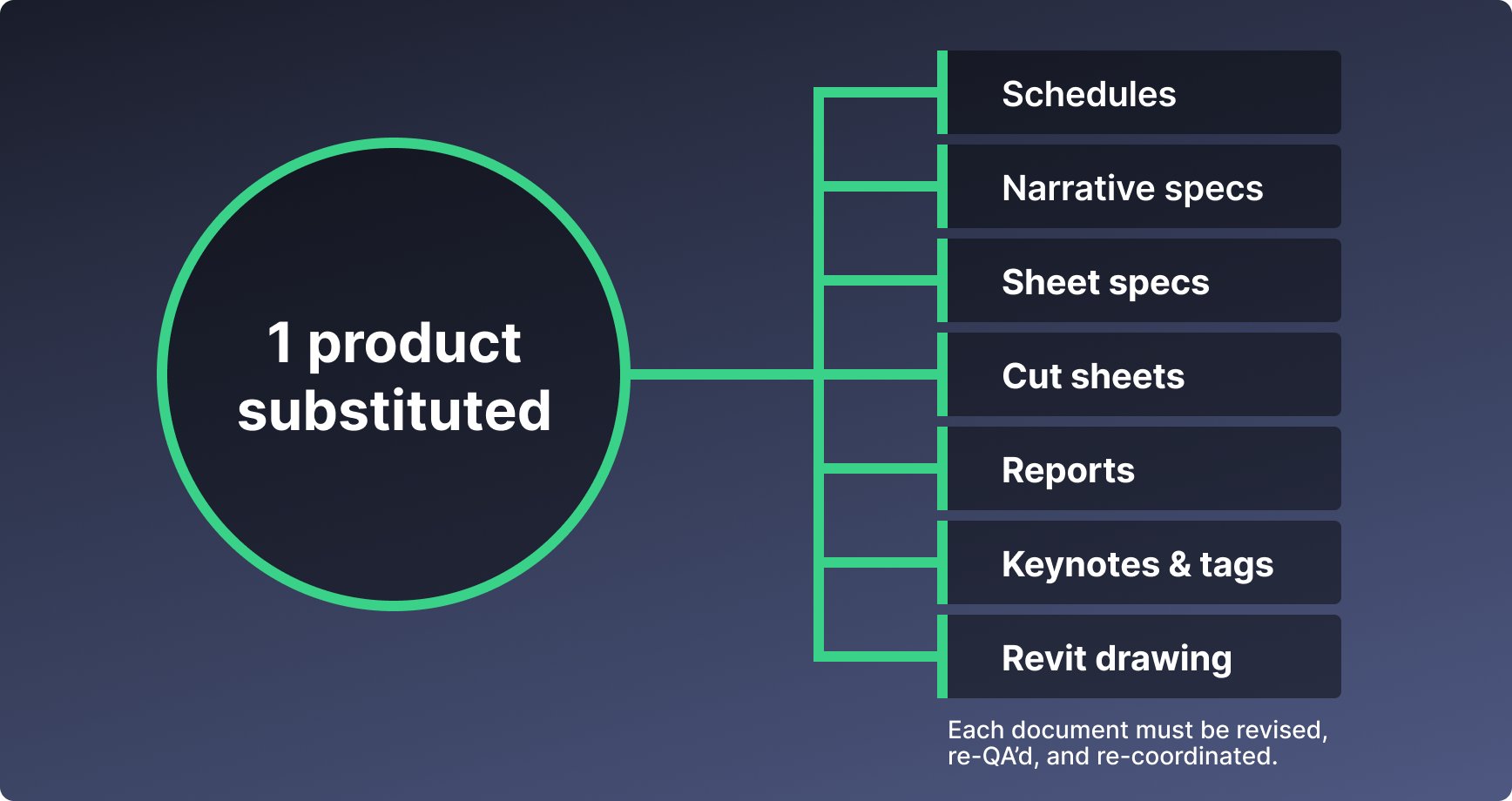
Coordination at submission is where this hurts most. It is the 11th-hour scramble to QA the drawings and specs against each other before a deadline, when there is the least time to catch a mismatch and the most riding on it.
Reconciling the documents by hand is the most time-consuming check in the set, and the one most likely to miss something.
This is material Intelligence
Every product you select is a material information model. It carries its full attribute set: aesthetics, performance, certifications, and cost. A document holds many products, so it draws on many models at once. Change one product and every document that uses it updates automatically and accurately.
The cost of errors: The same mistake gets more expensive at every phase
Coordination is not paperwork. It is what stops a document mismatch from reaching the field. A keynote that disagrees with the schedule costs an hour to fix in QA. The same mismatch caught by the contractor is an RFI. Caught later, it is rework. The later a problem is found, the more it costs to fix.
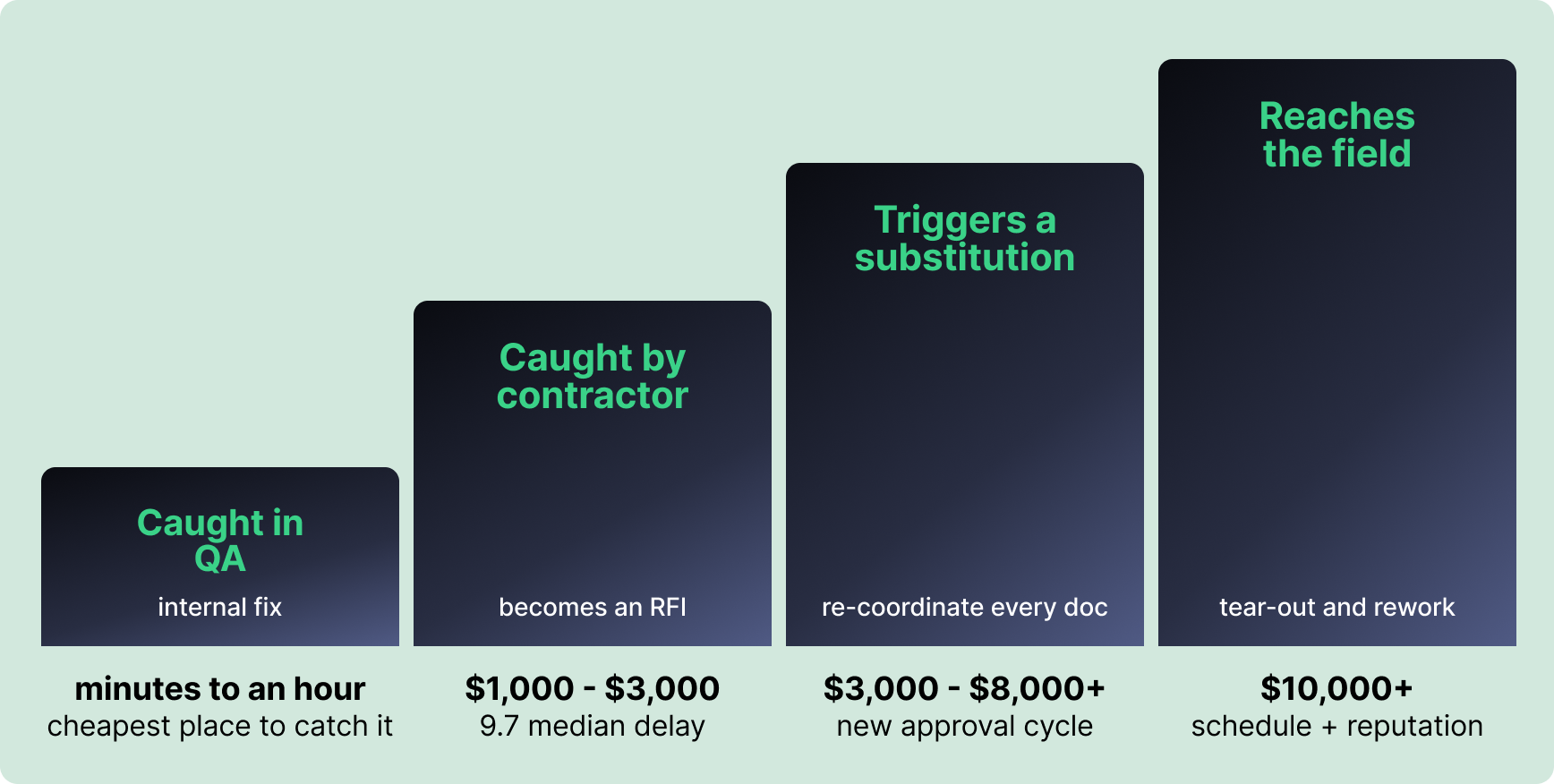
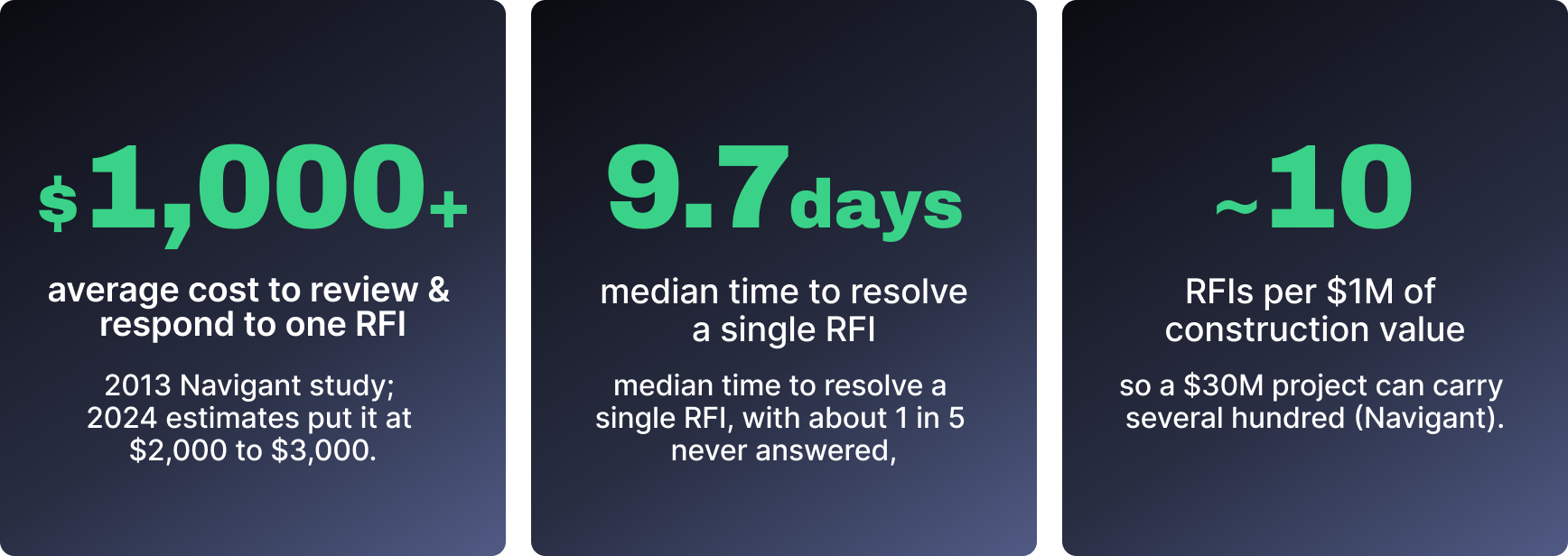
Not every RFI is a documentation error, but documentation errors are a preventable share of them, and they are the share that originates inside the firm. Each one caught at submission instead of in the field is the difference between an hour of internal time and a four-figure cost carried with a schedule delay attached.
What changes: The same work, from one source
The material information model behind each product selection drives all the documentation. Enter the selection once and every document is a view of it.
- Create from the selection, not from last project's file. SpecPlanner Pro writes the narrative specs and spec sheets; Smart Docs builds schedules, cut sheets, mood boards, and reports.
- Revise once. Change the selection and every document built from it updates.
- QA against verified data. Performance, certifications, and cost are maintained against the manufacturer source across 200,000+ products and 2,000+ certifications.
- Coordinate by verification. Annotation Pro carries keynotes and tags into Revit with bidirectional associativity, so drawings, BIM, specs, and schedules read from one source.
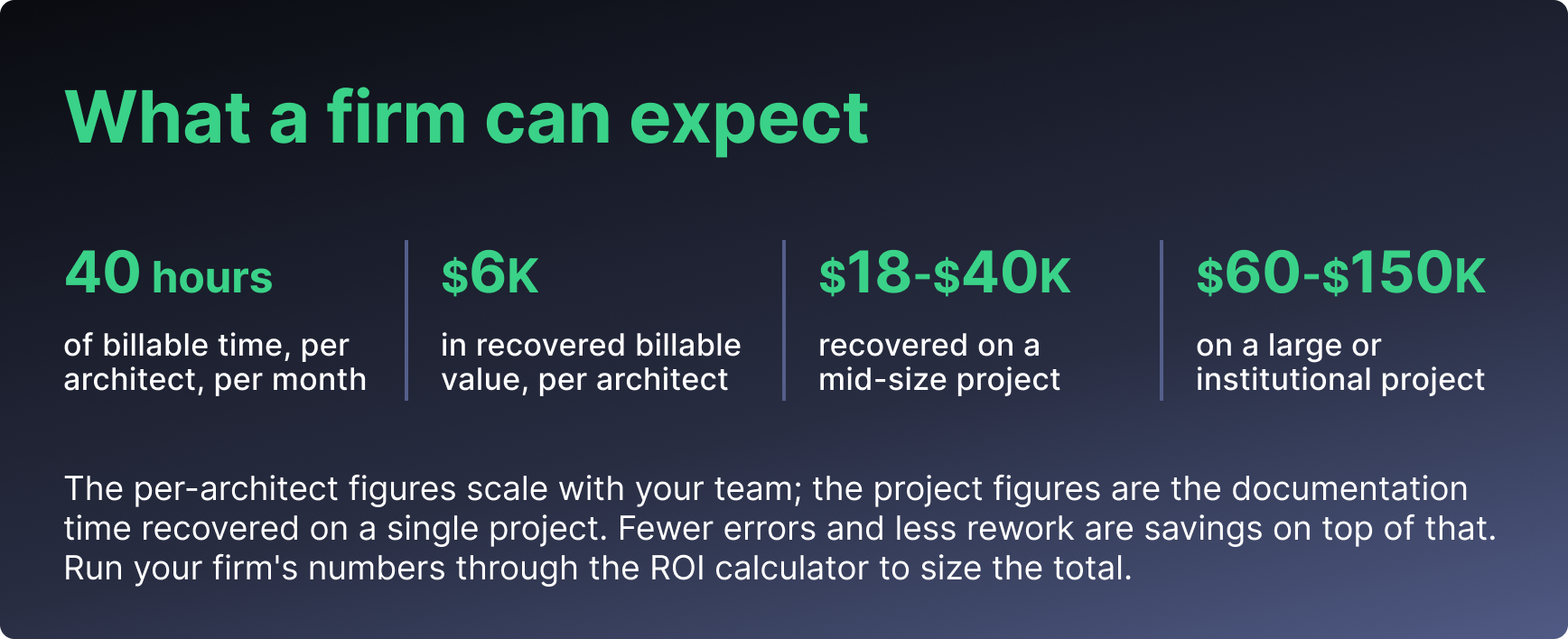
Material intelligence automates the documentation, eliminates the errors that come from documents disagreeing, and keeps every product's data accurate against the manufacturer source. The hours it returns go back to the firm, to take on more work or improve the margin on the projects it already has.
A good reputation is priceless
A firm is hired again on the strength of the buildings it delivers, and on the reliability and consistency of the work it produces. No fee buys that reputation back once it is lost.
When costly errors turn into change orders or mistakes in construction, the architect is often the one held to blame. This is avoidable. A single source of truth is what prevents it.
Material intelligence saves time, cuts errors, and protects margins. A firm can take on more work with fewer resources, and put the hours it recovers into better material selection. Better selection leads to better design,and better design to better buildings. That is the return: not only lower cost, but better work.
See what Material Hub returns for your firm, built on your own numbers. Book an ROI analysis